
UAE AI Arab Culture Benchmark Leads Today’s AI Roundup, Plus Cobi Funding and Healthcare AI Growth
Today’s headlines out of the UAE put a spotlight on a question many businesses have quietly been asking: does AI actually understand the Arab world, or is it just translating words without grasping meaning? A new UAE AI Arab culture benchmark from Abu Dhabi researchers tackles exactly that, while other stories cover fresh funding for a local AI platform, continued growth of AI in UAE hospitals, and a handful of notable international developments. Here’s what business owners need to know, in plain terms.

Note on sources: several outlets today (Gulf News, Emirates 24|7, thenationalnews.com) covered the same MBZUAI research project from slightly different angles, so we’ve grouped them together below.
UAE AI Arab Culture Benchmark: A First-of-its-Kind Measurement Tool
Researchers at Abu Dhabi’s Mohamed bin Zayed University of Artificial Intelligence (MBZUAI) are leading a project designed to help AI models genuinely understand Arab culture and regional dialects, rather than simply processing Arabic text mechanically, according to thenationalnews.com. As part of this effort, the same team has built what’s reported to be the first tool that actually measures how well an AI system understands Arab culture, rather than just its language skills, as detailed by Emirates 24|7. Gulf News framed the underlying issue neatly, asking whether AI can truly “speak like” Arabs rather than just understand them, in a piece available via Gulf News.
Why This Matters for Your Business
For any UAE or GCC business using chatbots, marketing copy generators, or customer service AI, this is directly relevant. A generic AI model that translates Arabic word-for-word but misses cultural nuance, local dialects, or regional context can produce awkward or even off-putting customer interactions. As benchmarks like this one mature, businesses will have clearer ways to judge whether the AI tools they’re adopting — for WhatsApp support, social media content, or voice assistants — genuinely serve Gulf Arabic-speaking customers rather than a generic Modern Standard Arabic that feels foreign to local audiences. This is especially relevant for hospitality, retail, and real estate brands marketing directly to Emirati and wider GCC audiences.
UAE AI Ecosystem: Funding and Healthcare Growth
Cobi Raises $1 Million to Expand Its AI Platform
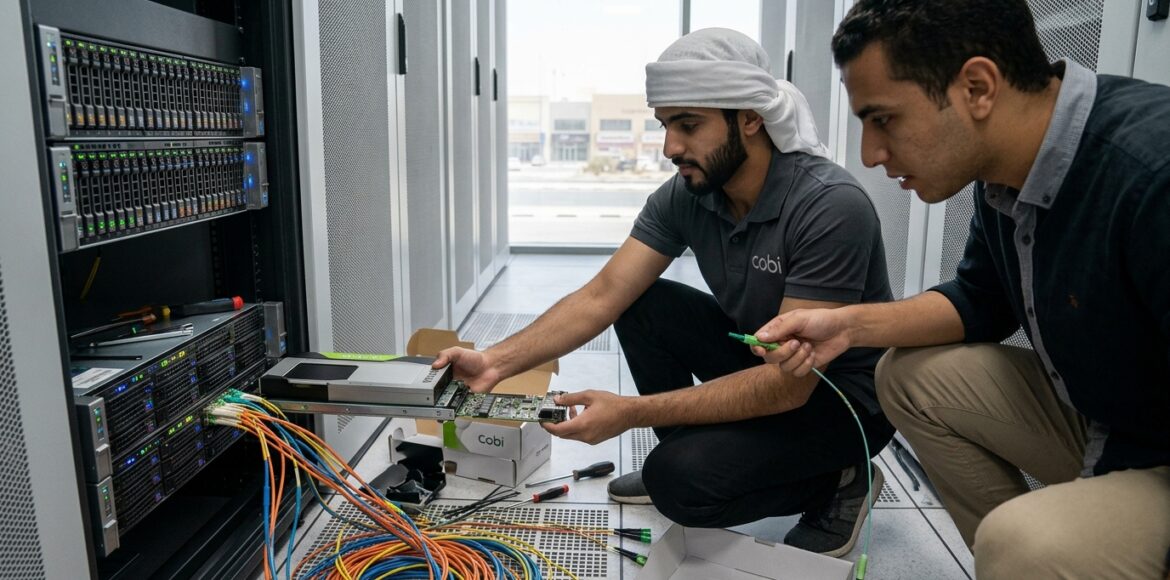
UAE-based startup Cobi has raised $1 million to grow its AI platform, according to CairoScene. While the snippet is brief on specifics, fresh investment into a local AI platform is another signal that the UAE’s startup funding environment for AI tools remains active — good news for local businesses looking for regionally-built solutions rather than relying solely on international vendors.
AI Keeps Expanding Across UAE Hospitals and Diagnostics
Separately, AI adoption in UAE healthcare continues to broaden across hospitals and diagnostic services, as reported by Digital Watch Observatory. For clinics, medical centers, and health-tech providers in the region, this trend reinforces that diagnostic AI is moving from pilot projects to routine use — a reminder for smaller healthcare providers to evaluate where automation could speed up patient intake, triage, or reporting without waiting for larger hospital groups to set the pace.
International AI Roundup: Infrastructure, Rankings, and Politics
A Former National Lab Building Eyed for AI Data Centers
In the US, a former Lawrence Berkeley National Laboratory building in Oakland is being considered as the site for a new AI data center complex, according to ABC7 Bay Area. This is another data point in the global race to build physical AI infrastructure. For businesses everywhere, including in the Gulf, more data center capacity generally translates to cheaper, faster access to AI services over time, though it also raises ongoing questions about energy use and local community impact that regulators are watching closely.
Forbes Publishes Its 2026 AI 50 List
Forbes has released its 2026 AI 50 list, ranking top artificial intelligence companies, according to Forbes. Lists like this are a useful shortcut for business owners trying to keep track of which AI vendors are gaining credibility and traction, particularly when evaluating potential partners for automation, analytics, or customer engagement tools.
AI Super PACs Enter US State Politics
On a very different note, AI-focused super PACs are reportedly pouring money into US state elections, according to Arizona Capitol Times. While this is a US political story rather than a business tool announcement, it signals just how much money and influence is now flowing into shaping AI policy — a trend worth watching for any company operating across borders, since regulatory direction in major markets like the US can eventually ripple into global compliance standards.
The Bigger Picture for Business Owners
Today’s mix of stories — a new benchmark for culturally-aware AI, fresh startup funding, expanding healthcare adoption, and global infrastructure and policy moves — all point to the same underlying theme: AI tools are becoming more specialized, more regionally aware, and more deeply embedded in everyday operations. Whether you run a clinic, a real estate agency, an e-commerce store, or a hospitality brand in the UAE or wider GCC, the practical question isn’t whether to use AI, but which tools actually understand your customers and your market.
If you’re curious how AI automation — from culturally-aware chatbots to smarter customer service workflows — could work for your business, it’s worth exploring what’s possible with the right local partner. Visit DigiPromise to see how these developments could translate into real, practical gains for your business.