

Nvidia AI Model UAE Deal Signals Deeper US-Gulf Tech Ties
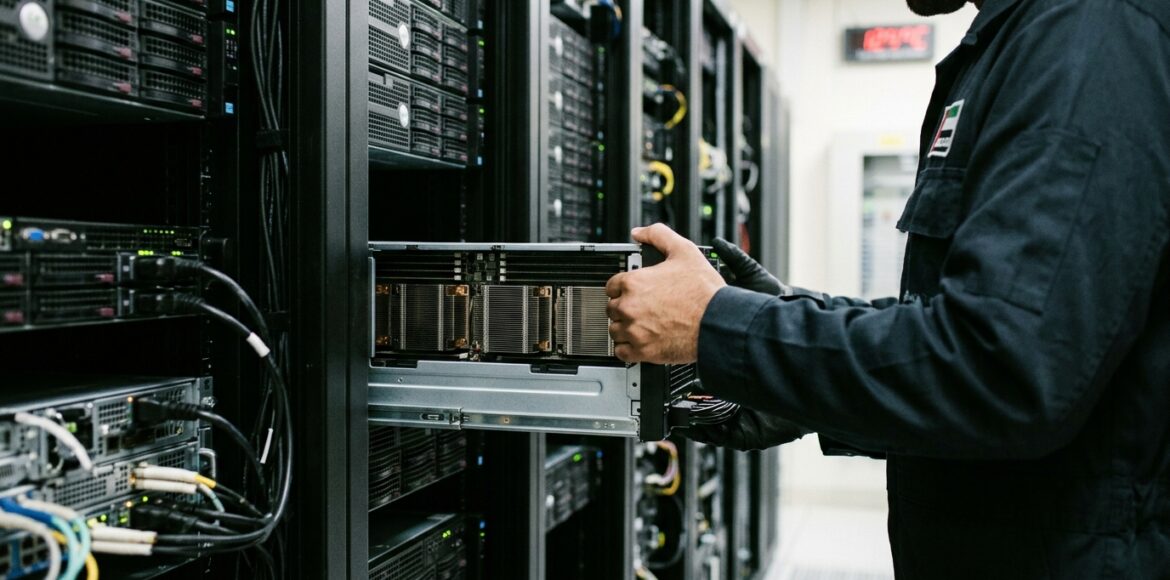
Today’s news flow puts the UAE squarely at the centre of the global AI conversation, with a major chip-and-model story from Nvidia, a fresh legal development on AI training data, and a sharp look at how Gulf companies are moving AI projects from small pilots into full-scale operations. Alongside these, Dubai’s brand strength and a massive regional property push show the wider business backdrop against which all this technology is landing. Here’s what business owners across the UAE, GCC, US and UK need to know.

UAE and Gulf AI Developments
Nvidia AI model UAE push strengthens US-Gulf ties
According to Rest of World, Nvidia is offering a free AI model that could pull the UAE even closer into the American technology orbit. In practical terms, this means UAE-based companies and government entities may get easier, cheaper access to advanced AI infrastructure built on US chips and software standards, rather than relying on alternative ecosystems from other global powers. For local businesses, this is a signal worth watching: the tools and platforms your automation vendor recommends next year could increasingly be shaped by this deepening US-UAE tech relationship. Companies in banking, logistics, retail and hospitality that are planning AI investments should keep an eye on which infrastructure providers dominate the region, since that will affect pricing, compliance and long-term support options.
Collective licensing moves forward for AI training in the UAE
The Global Legal Post reports a step forward in collective licensing arrangements for AI training data in the UAE. In plain terms, this is about creating clearer, more organised ways for AI companies to legally license content — such as text, images or media — that gets used to train AI models, rather than operating in a legal grey zone. For business owners, especially those in publishing, media, marketing agencies and content-heavy ecommerce brands, this matters directly. If your business produces original content, clearer licensing frameworks could eventually mean new revenue opportunities from AI training deals, but also new compliance obligations around how your own content is used or protected. It’s an early but important step toward a more regulated AI data economy in the region.
Moving UAE AI projects from pilots to scale
Fast Company Middle East examines how the idea of “new intelligence” is helping organisations move AI beyond small trial projects into real, scaled operations. This is a familiar sticking point for many businesses: it’s easy to run a one-off AI chatbot test or a small automation pilot, but much harder to embed AI into everyday workflows across an entire company. For UAE and GCC businesses in customer service, real estate and hospitality, this is the practical challenge of 2026 — not whether to try AI, but how to scale it responsibly across departments so it actually saves time and money rather than just adding another disconnected tool.
Dubai’s brand strength and regional real estate ambitions
Two related business stories round out the local picture. Forbes reports that the Dubai brand is back and more resilient than ever, while Bloomberg.com reports that Dubai and Abu Dhabi property firms are eyeing a $12 billion Maldives project. Neither story is AI-specific, but both underline the confidence and capital flowing through the region’s real estate and hospitality sectors. As these firms expand into ambitious new markets, AI-driven tools for customer engagement, booking management and property marketing will likely become part of how they compete and scale efficiently.
International AI Developments
Gates on the “turbulent AI era”
On gatesnotes.com, Bill Gates argues that AI has entered a turbulent phase and that the choices made now by governments, companies and individuals will shape outcomes for years to come. For business owners, the takeaway is simple: the direction of AI regulation and adoption isn’t settled yet, so staying informed and flexible — rather than locking into one rigid approach — is the safer path forward.
OpenAI forms advisory group on maths and AI
OpenAI has announced an advisory group focused on mathematics and artificial intelligence, aiming to guide how AI models handle complex reasoning and problem-solving. While this sounds technical, better mathematical reasoning in AI models eventually trickles down into more reliable tools for finance, engineering, logistics planning and data analysis — areas many businesses already lean on AI for.
A new AI learning space at Marquette
Marquette Today reports on a new campus learning space designed to deepen understanding, problem-solving and reflection around artificial intelligence. Stories like this reflect a broader global trend: institutions everywhere are investing in AI literacy, which over time means a more AI-fluent workforce that businesses in every sector, including the UAE and GCC, will be able to hire from.
What This Means for Your Business
- Deeper US-UAE AI ties via developments like the Nvidia AI model UAE story could shape which platforms and vendors dominate the local market.
- Clearer AI licensing rules mean content-heavy businesses should start thinking now about how their data and creative work may be used or protected.
- Scaling AI beyond pilot projects remains the real challenge for most companies — success depends on integration, not just experimentation.
- Broader global conversations around AI governance and education suggest the landscape will keep shifting, rewarding businesses that stay adaptable.
Whether it’s understanding how the Nvidia AI model UAE developments might affect your tech stack, navigating new AI licensing questions, or simply figuring out how to move your own AI experiments from a small pilot to something that actually runs your business day to day, these are exactly the kinds of practical decisions we help companies work through. If you’re curious what AI automation could look like for your customer service, marketing or operations, feel free to explore what’s possible at DigiPromise.