

Dubai AI Rainfall Prediction Leads Today’s UAE AI News Roundup
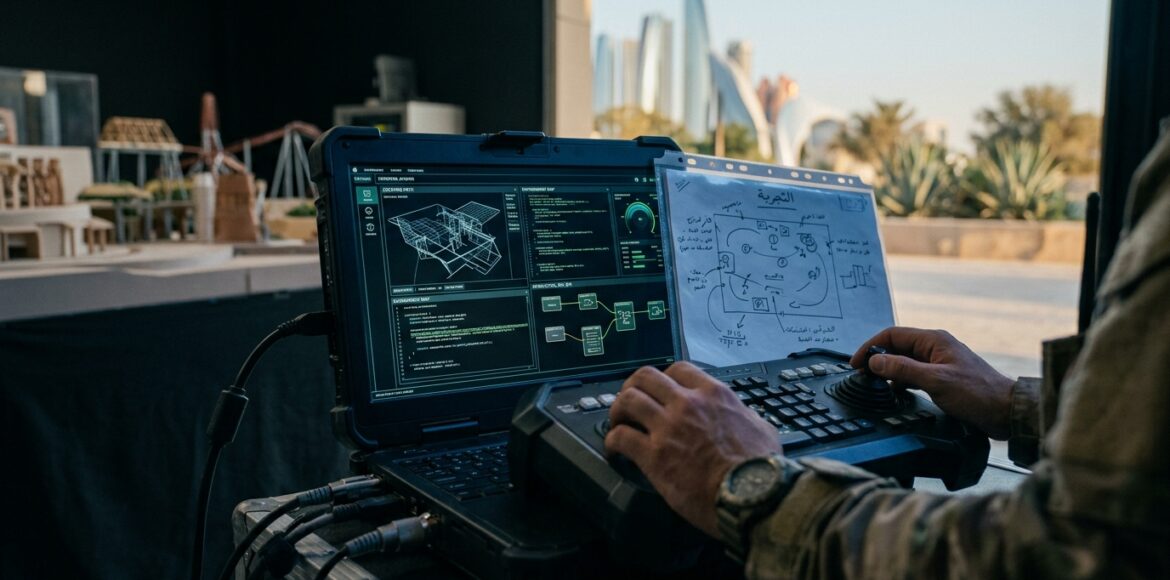
From forecasting the skies over the Gulf to governing the next generation of autonomous software agents, the UAE’s AI story keeps widening. Today’s headlines range from a striking Dubai AI rainfall prediction breakthrough to Disney’s AI-powered plans for Abu Dhabi, a new flight-crew safety tool following the flydubai incident, and fresh moves in composites manufacturing and agentic AI governance. Here’s what business owners across the UAE, GCC, USA and UK need to know – and what it actually means for day-to-day operations.

Dubai AI Rainfall Prediction: Forecasting Extreme Weather Eight Days Out
According to Daily News Egypt, new AI weather models successfully flagged Dubai’s record-breaking rainfall event a full eight days before it happened. That lead time is a dramatic improvement on traditional forecasting, which typically struggles to give reliable warnings more than a day or two in advance for extreme rain events.
Why it matters for business: an eight-day warning window changes everything for logistics planners, retailers, hospitality groups and real estate developers. Construction sites can reschedule pours, airlines and ports can pre-position resources, insurers can adjust exposure models, and malls or hotels can staff and stock accordingly. For a city where a single flooding event can disrupt roads, flights and supply chains for days, this kind of AI-driven lead time is a genuine competitive advantage for any operations team willing to plug it into their planning calendar.
Aviation: Entertainment Bets and Safety Tools Both Lean on AI
Disney Tests AI Gaming Reset Alongside Abu Dhabi Park Plans
Per Simply Wall Street, Walt Disney is combining its Abu Dhabi theme park expansion with a reset of its AI gaming strategy, taking on new risk as it blends physical entertainment with AI-driven experiences. Details are still emerging, but the move signals that major global entertainment brands see the UAE as a serious testbed for AI-enhanced attractions.
For hospitality and entertainment operators in the region, this is a reminder that guest experience is increasingly a software product as much as a physical one – think AI-personalised itineraries, interactive attractions and dynamic pricing, all of which smaller operators can adopt in scaled-down form.
AI Tool Claims It Can Flag Suspicious Flight Crew Behaviour
Ynetnews reports that, following the flydubai incident, an Israeli-developed AI system claims it can flag suspicious flight crew behaviour directly via smartphone, offering airlines a new layer of in-flight monitoring. This follows growing industry interest in AI-based safety and risk-detection tools for aviation.
Beyond aviation, the broader lesson applies to any business running shift-based or safety-critical operations – from logistics fleets to healthcare facilities: AI-based anomaly detection on everyday devices is becoming a realistic, affordable layer of risk management rather than a far-off concept.
UAE’s Expanding Agentic AI Ecosystem: Governance and Manufacturing
TahawulTech.com reports that Optro has established a UAE hub specifically to support agentic AI governance – the frameworks needed to keep autonomous AI agents accountable, auditable and compliant as they take on more decision-making inside businesses. As companies hand off tasks like customer service triage, procurement decisions and fraud checks to AI agents, governance structures like this become essential rather than optional, particularly for regulated sectors such as finance, healthcare and real estate.
Separately, Morningstar reports that Robo.ai is planning its ALIF Composites facility with a targeted 10 million square metres of annual capacity by 2027, pointing to continued momentum in AI-linked advanced manufacturing investment in the region. Together, these two stories show the UAE building out both the oversight layer and the industrial capacity needed to scale AI responsibly – good news for any business looking to adopt AI tools with confidence that local governance support exists.
International Roundup: Education and Critical Thinking
Outside the region, universities are moving to formalise AI skills. UC Santa Barbara is rolling out a ‘base camp’ approach to campus-wide AI adoption, while UA Little Rock has launched a new artificial intelligence degree programme, signalling that the talent pipeline for AI-literate graduates is widening. Meanwhile, Greater Good: The Science of a Meaningful Life explores how AI tools, used thoughtfully, can actually sharpen human critical thinking rather than replace it.
For business owners, the practical takeaway is simple: a more AI-literate workforce is coming through the pipeline, and the best outcomes come from treating AI as a thinking partner for staff – whether that’s in customer service, marketing copy, financial analysis or strategic planning – rather than a black box that removes the need for human judgement.
What This Means for Your Business
Taken together, today’s stories show AI moving into very practical corners of business life – weather-driven operational planning, safety monitoring, entertainment experiences, governance frameworks and workforce skills. Whether you run a hotel in Dubai, an ecommerce store in London, a clinic in Riyadh or a real estate firm in New York, the common thread is the same: AI tools are becoming easier to adopt and harder to ignore. If you’re curious how automation, predictive insights or AI-powered customer engagement could work for your business, the team at DigiPromise is always happy to talk through practical, no-nonsense options.

 DigiPromise