
Microsoft’s $10 Billion Gulf AI Investment Reshapes the UAE’s Tech Future
Today’s headlines confirm what many in Dubai and the wider Gulf have suspected for a while: global tech giants see this region as a serious AI growth market, not just a side bet. The biggest news is the Microsoft Gulf AI investment, a pledge of more than $10 billion aimed at cloud and AI infrastructure, alongside stories on UAE trade diplomacy and bigger-picture questions about who controls AI decisions. Here’s what business owners across the UAE, GCC, US and UK need to know.

Microsoft’s $10 Billion-Plus Gulf AI Investment Signals a New Era
Microsoft has announced plans to invest more than $10 billion in the Gulf, with a specific focus on digital resilience, cloud capacity and AI infrastructure, according to Reuters. The company’s own announcement, covered on The Official Microsoft Blog, frames this as strengthening the company’s long-term commitment to the Middle East through technology, digital resilience and people. A separate report from thecradle.co confirms the pledge covers Gulf cloud and AI infrastructure specifically.
For business owners, this matters more than it might seem at first glance. When a company like Microsoft commits this level of capital to regional data centres and cloud capacity, it typically translates into faster, more reliable AI services closer to home — lower latency for AI-powered customer service tools, better compliance with local data residency rules, and more affordable access to enterprise-grade AI for mid-sized companies in retail, hospitality, real estate and healthcare. If you’ve been holding off on AI adoption because of concerns about data location or service reliability in the region, this kind of infrastructure investment is exactly the sort of development that should ease those worries over the coming year or two.
UAE Deepens AI Ties Through Trade and Governance
Argentina-UAE Trade Talks Put AI on the Agenda
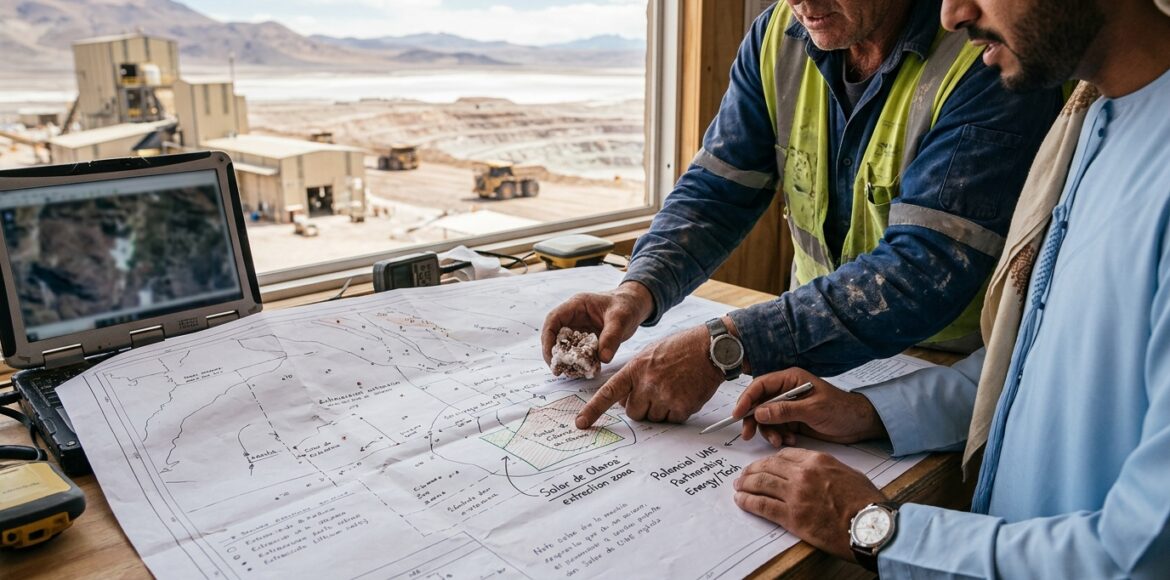
The UAE has launched trade pact talks with Argentina that explicitly cover mining, energy and AI, as reported by BNamericas. The details are still thin, but the fact that AI sits alongside energy and mining in a formal trade discussion shows how central the technology has become to the UAE’s broader economic diplomacy. For UAE-based exporters, logistics firms and energy sector suppliers, this is worth watching — new trade frameworks often open doors for cross-border partnerships, joint ventures and access to new markets for AI-enabled products and services.
Who Really Owns AI Decisions in Government?
A thought-provoking piece from thearabweekly.com raises a question that applies well beyond government: when AI systems influence or make decisions on someone’s behalf, who is accountable for the outcome? This is a governance question every business using AI tools should be asking internally too. If your company deploys AI for hiring screening, credit decisions, customer service escalations or automated pricing, you need clear internal ownership of those outcomes — not just a vendor contract. Regulators across the GCC are increasingly attentive to this, and getting ahead of accountability questions now is far cheaper than retrofitting governance later.
International AI Developments Worth Knowing About
Bill Gates published a reflection on what he calls a “turbulent AI era,” arguing that the choices made now around AI development are critical for the years ahead, via Gates Notes. For business leaders, the underlying message is simple: the AI landscape is shifting quickly, and companies that build flexible, well-governed AI strategies now will be better positioned than those that wait for things to “settle down” — because they may not, at least not soon.
On the education front, Rice University announced it will launch a Master of Artificial Intelligence degree program starting in 2027, according to Houston Public Media. This reflects a wider global trend of universities racing to build formal AI talent pipelines — a signal that demand for AI-literate staff is only going to grow, including for businesses in the UAE and GCC trying to hire or upskill teams locally.
Finally, a notably political story: US diplomats have reportedly been instructed to use the term “super intelligence” instead of “artificial intelligence” as part of a push under the Trump administration, according to The Hill. While this is largely a semantic and political story rather than a technical one, it does highlight how the language around AI is becoming increasingly charged internationally — something to be mindful of if your business communicates with US government partners or contractors.
What This Means for Your Business
Taken together, today’s stories point to the same conclusion from different angles: AI infrastructure in the Gulf is scaling up fast, governance questions are becoming unavoidable, and talent and terminology around AI are shifting globally. Whether you run a retail chain in Dubai, a real estate agency in Abu Dhabi, a clinic, or an ecommerce store serving GCC customers, the practical takeaway is the same — better AI infrastructure means better tools are coming your way, but you still need a clear plan for how you’ll use them responsibly and effectively.
If you’re curious about how AI automation could help your business handle customer service, marketing, bookings or day-to-day operations more efficiently, it’s worth exploring what’s possible with the right partner. DigiPromise works with businesses across the UAE, GCC, US and UK to turn exactly these kinds of AI developments into practical tools for growth.

 DigiPromise